You glance at the time and it is 11:11. Later, the same digits appear on a receipt. A few days on, you see them again during a conversation about a decision you have been putting off. A coincidence can feel especially striking when it arrives at a moment that already matters to you.
Watch Angel Numbers Explained on YouTube.
In contemporary spiritual practice, angel numbers are repeating or otherwise striking sequences that people use as symbols. In this guide, 111 is a prompt about beginnings, 222 about balance, 333 about creative growth, 444 about support and 555 about change. These are interpretations. Different practitioners use different associations, and seeing a number cannot tell you what will happen next.
You can get something worthwhile from the experience by pairing it with an honest question. The practices below start with a situation you can describe, then help you choose a response you can actually try.
- Why repeating numbers seem to follow you
- Five angel numbers and what to ask yourself
- A seven-day reflection practice
- Questions about angel numbers
Why repeating numbers seem to follow you
Two ways to understand the same moment
If you approach repeating numbers spiritually, you may consider the moment a reminder to pray, reflect or check in with your intuition. The significance can come from what you were thinking at the time, what the number means in your tradition or how you have chosen to use it. Two people looking at the same clock can come away with entirely different questions.
There is also an everyday explanation for the feeling that a pattern has become more frequent. Once something has caught your attention, further examples can stand out. You may notice them more readily and remember them better than the unremarkable numbers you saw alongside them. Linguist Arnold Zwicky discussed this as the frequency illusion. The American Psychological Association defines confirmation bias as a tendency to favour evidence that supports your expectations, which helps explain why a memorable match can carry more weight than numerous ordinary encounters.
Think of the last time you learnt an unfamiliar word. You may have seen it again in a book or heard it in a podcast and felt as if it had suddenly become fashionable. It could have become more common, but you also have a new reason to recognise it. Your memory of similar words and everyday phrases is unlikely to be as vivid. Repeating digits are easy to recognise for the same reason that a familiar word is easy to pick out of a page.
- Arnold Zwicky’s index of writings on linguistic illusions
- APA Dictionary of Psychology entry on confirmation bias
Meaning and evidence answer different questions
You can say, “This made me think about a change I already want to make.” That is a report about your experience. Saying, “This proves I should make the change today,” is a claim about the world that requires a different kind of evidence. That distinction leaves room for spiritual practice and grounded decision-making in the same life.
Suppose you see 555 while looking at job adverts. You might feel a sense of relief that tells you how much you want something to change. Your reaction is useful information. To decide what action to take, you still need to look at practical details such as your options, where you would find support and which questions you need answered. You could begin with a conversation about your working hours or make a list of what a better role would include.
Where numbers tend to appear
Clocks, dates, receipts, order numbers, train times and page numbers give you many chances to encounter repeats. A clock at 11:11 presents four matching digits, so it is more memorable than 11:08. If you regularly look at your phone at about the same time, your routine may also explain why a particular display seems familiar. A sighting on a receipt could feel more surprising because you did not expect to see it there.
The timing of the noticing and the subject on your mind are two pieces of information. Write them down separately. “I saw 222 at 2:22 while waiting for a reply” describes the event. “I want to feel more comfortable leaving the outcome open” describes what you made of it. Your reflection can focus on the second sentence even when the first has an ordinary explanation.
Five angel numbers and what to ask yourself
| Number | Spiritual theme used in this guide | One grounded question |
|---|---|---|
| 111 | New beginnings and intention | What do I want to begin, and what is the smallest step? |
| 222 | Balance, patience and trust | What can I act on today, and what can I give time? |
| 333 | Growth and creativity | What would I try if I gave myself permission to be a beginner? |
| 444 | Stability and foundations | What helps me feel steady, and how can I make it easier to reach? |
| 555 | Change and transformation | What am I ready to do differently, and what do I want to carry forward? |
111 and the new beginning you can see
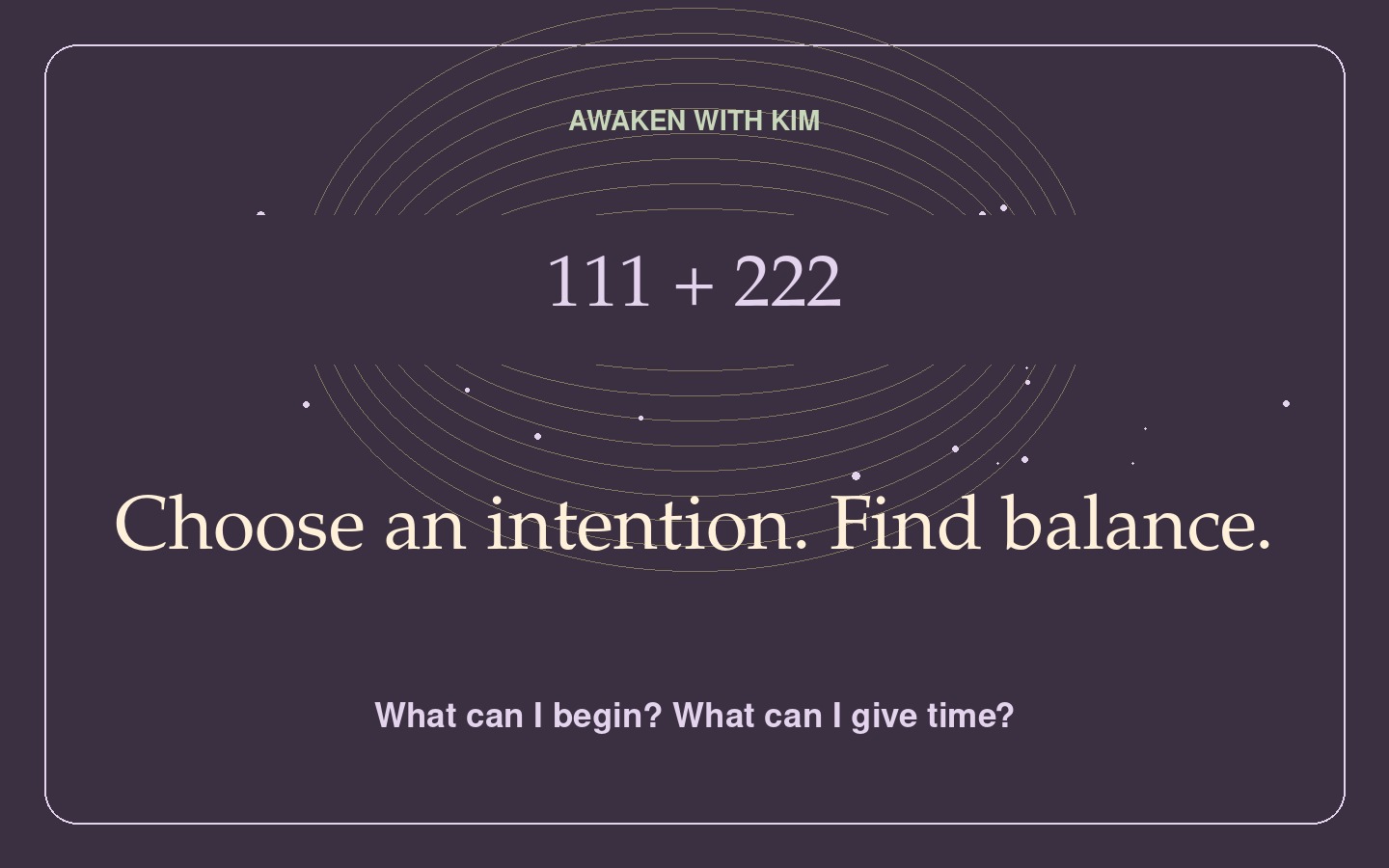
A new beginning can be as modest as moving an appointment, picking up a neglected project or asking a question you have been avoiding. The symbolism of 111 lends itself to focusing on one intention. If several ambitions are competing for your attention, choose one that would change something you actually experience this week.
Imagine that you want more room for your spiritual practice. “Practise every morning for an hour” may sound inspiring until you look at your schedule. A fifteen-minute walk on a Saturday or five minutes with a notebook before the kettle boils might be a better experiment. At the end of the week you will have information about what feels natural in your routine. You can extend the habit if it suits you.
There is a useful difference between naming a broad aim and giving yourself a concrete cue. Peter Gollwitzer’s work on implementation intentions describes plans that connect a recognisable situation with a response. You can adapt the idea with a sentence like “When I make my first cup of tea on Monday, I will write one line about what matters today.” Your chosen cue should occur in ordinary life, so you can use the practice whenever the conditions are right.
Three ways to make an intention more specific:
- Name the moment. “I want to be creative” becomes “On Sunday after lunch I will sketch for ten minutes.”
- Reduce the first step. “Launch my idea” becomes “Write down who I hope this would help and what they would gain.”
- Define what counts. “I will start looking after myself” becomes “On Friday I will reserve an evening for rest.”
If you notice 111 again after writing an intention, take it as a chance to ask whether you still want the same thing. You can revise your plan honestly. A step towards a goal can also reveal that the goal needs to change.
Journal prompt: “This week, I want to give more attention to ___. The first action I could take within a day is ___.”
222 and the balance you can influence
Balance may be about rest, attention, relationships or the time you spend thinking about an outcome you cannot control. The way to make the 222 association practical is to sort a concern into two columns: something I can do and something I can give time. A concern can have an entry in both columns.
Suppose you are waiting for a response to an important message. You could choose a reasonable time to follow up and write that date down. You could also set your phone aside during lunch and give yourself a break from looking for a notification. There may still be an awkward feeling of uncertainty. The exercise gives you something to do with your attention while you wait.
The same approach works when you feel busy in every area of life. Maybe an important task needs half an hour of quiet, but your day is broken into fragments. You might be able to ask for a short slot, turn down an optional meeting or move something to a more realistic time. If the demands on you genuinely cannot shift today, be precise about that. You might choose a practical adjustment for tomorrow instead.
If the question is about a relationship, distinguish the facts from the story you are telling yourself. “I have not had a reply since Tuesday” is a fact. “They must be losing interest” is one possible story. A measured response might be to check in once if that is appropriate, then return your attention to people and commitments that are available to you.
Try this three-minute practice:
- Name the one issue taking up the most space.
- Write one action you could take yourself.
- Write one outcome you have to give time.
- Choose a time to reassess so you can return to the rest of your day.
Journal prompt: “What is mine to act on today? What can I leave open until I know more?”
333 and the parts of you that want to grow
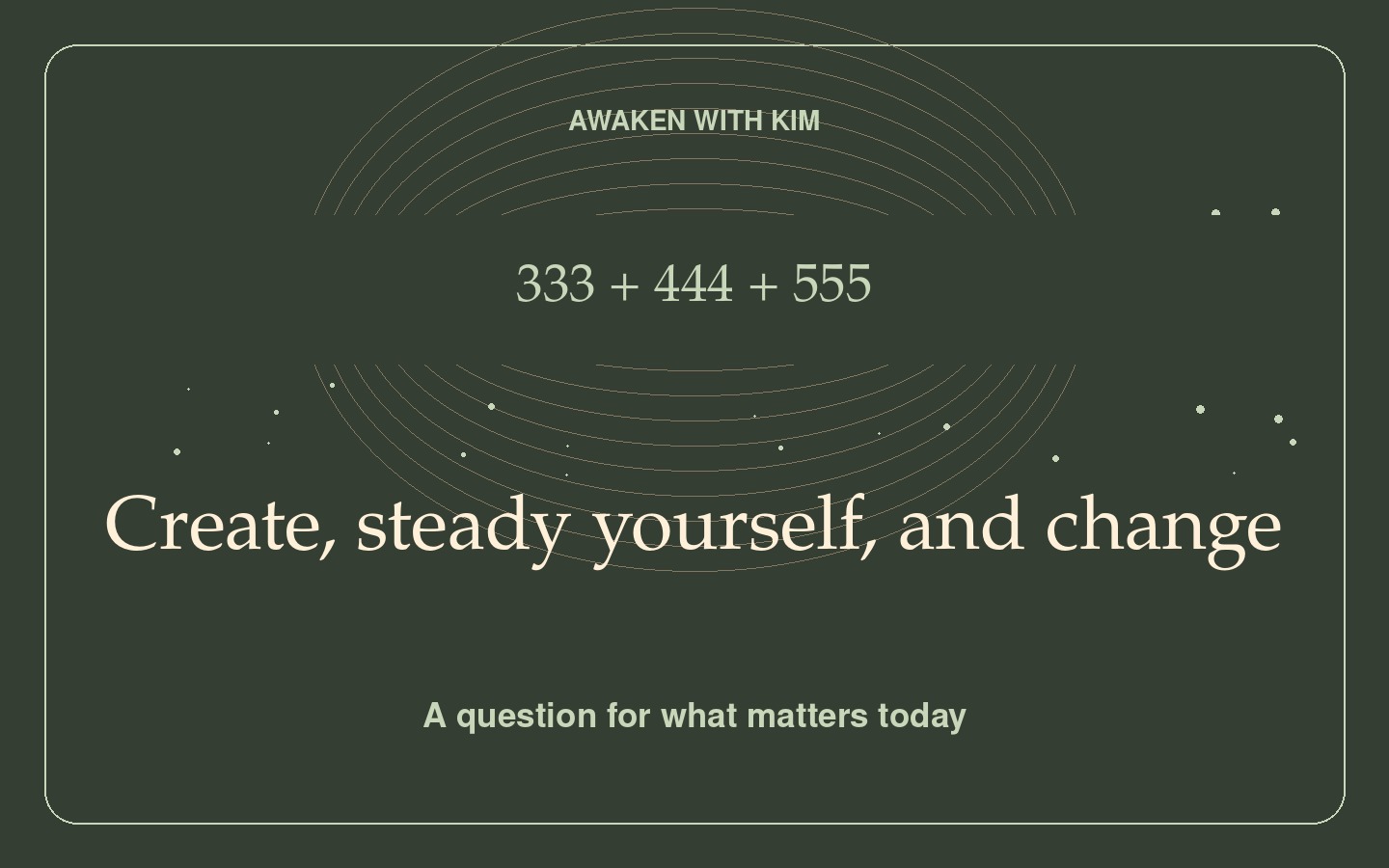
Creativity can mean making something with your hands, developing a solution to a problem or saying out loud what you actually think. People sometimes associate 333 with self-expression and growth. Start by finding a useful expression of that idea, especially if a creative habit has fallen away.
Imagine that you used to enjoy drawing on a park bench. Over time, the thought of getting better started to take up more space than the act itself. You could take a pencil out for five minutes and draw the outline of one leaf. Give it a beginning and an end. If you want to keep going afterwards, do. You have already had a chance to find out whether you still enjoy the experience.
If creativity feels too broad, try one of these small experiments:
- Write down an idea you have been holding back and describe it to a trusted person.
- Take three photographs of light or colour during an ordinary walk.
- Play a piece of music you used to enjoy and see what it brings to mind.
- Make the simplest version of something you would like someone else to use.
- Put a question at the top of a blank page and write for five minutes.
A creative exercise can show you what is holding your attention without asking you to place a value on what you produce. After five minutes, ask whether you felt curious, bored, absorbed or self-conscious. Each response gives you a direction. You might decide to try again with a different material, write something for yourself alone or ask someone to join you.
For a purpose-led business, 333 could mean giving an idea a small audience. Write three sentences about the person it would help, the situation they are in and what they might find valuable. Share the idea with one person who fits that description and listen closely to their questions. You will learn more from the conversation than from making the description more elaborate in private.
Journal prompt: “What would I make, say or try this week if I were allowed to be a beginner?”
444 and the support you can return to
Stability may come from routines, practical resources, relationships and boundaries. The 444 association can prompt you to look at the foundations you already have. Ask what genuinely makes a hard day more manageable. Many useful supports are ordinary enough that you almost overlook them.
Think of a week when you had too much to do. What helped most? It could have been a friend who listened without interrupting, one prepared meal, a morning outside or a decision to finish work on time. If you can identify a support, you can often make it easier to use. Write the friend’s name in your diary and set aside time to call. Keep the food you want to prepare on the part of the shelf you can reach. Make the walk simple enough to begin from your front door.
Look for a pattern in what feels steady to you. A quiet morning might be helpful because nobody expects an answer from you yet. You could create a similar feeling on a busier day by setting aside fifteen minutes between commitments. A group class may be valuable because it gets you out of the house and provides company. You might choose another way to meet people if the class changes time.
Boundaries can make support dependable. Decide what time you want to end a task and what you will do with work left over. A simple habit of writing down the next step before you stop can help you pick it up without keeping the whole task in your head. If somebody asks you for something you cannot realistically do, you might offer a specific time or a smaller part you can contribute.
Journal prompt: “What helped me feel steady on a difficult day? What would make it easier to use that support again?”
555 and the change you can describe
People often interpret 555 as a symbol of change. In practice, the most useful first step is to find out what kind of change you are facing. Are you responding to a change that is already happening, wishing for a change you have yet to make or guessing about something that might happen? Each situation calls for a different response.
For a change already happening, list what is genuinely different and what you are still able to rely on. If you have moved house, for instance, you might have a different route to work, a quieter kitchen and less time with a familiar neighbour. The new place may be a good fit, while you still miss parts of the old one. You can acknowledge both experiences and make one choice about how to stay connected.
For a change you want, begin with the problem you hope to solve. You might be tempted to change careers when you chiefly want shorter hours or a better relationship with the people you work with. Write down what matters most and compare several ways of getting closer to it. A conversation or small trial can help you decide whether your preferred change is proportionate to the difficulty you are facing.
When you are anxious about a possible change, ask what reliable information would help you prepare. It might be a date, a conversation or a better understanding of your options. Notice how you feel as you fill in those gaps. It may become clearer which parts of the situation need your attention.
Three prompts to try when you notice 555:
- What has changed in my circumstances?
- What response can I test before I make a bigger decision?
- What is worth keeping as I move forward?
Journal prompt: “I am ready to do ___ differently. I want to carry ___ with me. My next step is to find out ___.”
A seven-day angel numbers reflection practice
This practice uses repeated numbers as occasional prompts. It can fit into the life you already lead. Keep a small note on your phone or find a page in your journal. You will need about a minute when a number catches your attention and ten minutes at the end of the week. If no sequences catch your eye, choose one of the questions that feels relevant and use it anyway.
Before you start
Write today’s date and a sentence about what matters most right now. You could mention an unfinished project, your energy levels, a change you are navigating or something you have been looking forward to. This starting note gives you something to compare with what comes up later. It can also help you recognise that a theme mattered to you before you saw a matching number.
Decide on the smallest version of the practice you would be willing to do on a busy day. A voice note, a single line or a few words on paper are all suitable. A long entry is optional. Use whatever makes it easy to return to the practice when the moment has passed.
When you notice a number
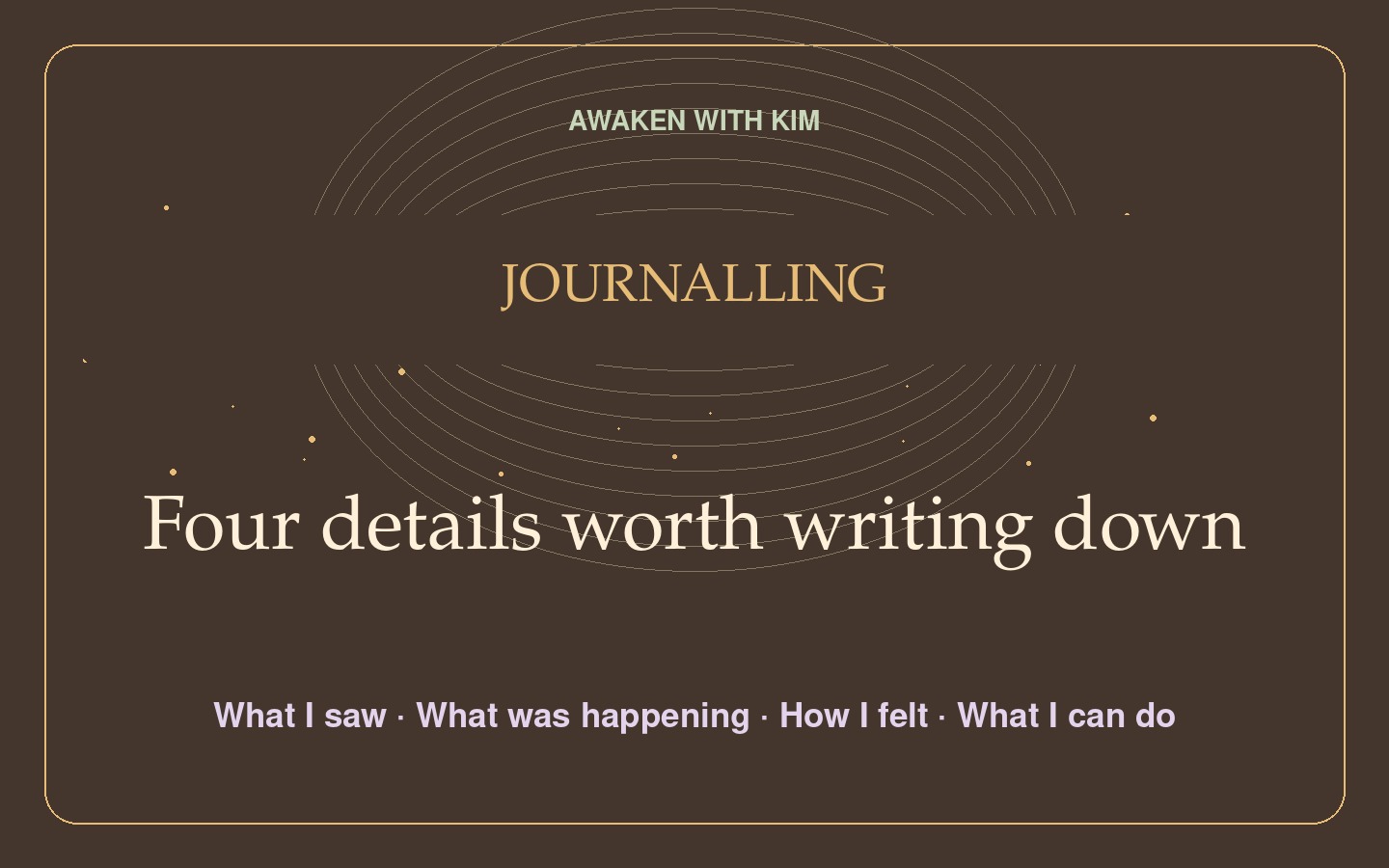
Record four details in this order:
- What I saw. Note the sequence, place and approximate time.
- What was happening. Record the thought, activity or conversation already underway.
- How I felt. Choose a concrete word such as relieved, curious, stretched or hopeful.
- What I can do. Pick one question and one next step, or leave the action open if you need more information.
Here is an example. “Tuesday, 2:22 pm on the office clock. I had been waiting for a reply about a project. I felt impatient. The balance question led me to decide when I would follow up. I wrote Friday in my diary and finished the task I had interrupted.”
A different person could notice the same time while enjoying a walk. The balance question might prompt them to protect more evenings or make time for a friend. Your journal can include the connection you found as well as occasions when a number had little effect on you.
Build in a comparison
If you want to find out whether a sequence really shows up more often, give yourself a small, fair comparison. Choose a target pattern and a neutral sequence you consider equally memorable. For a few days, check the time only when you ordinarily would and note both patterns when you see them. Include a handful of ordinary timestamps if you can. This is a personal observation exercise. Your routines and the places you look affect what you can notice.
You may discover that you check a clock just before a regular appointment or that most of your repeated numbers come from the same type of display. That is useful information. You can keep a reflection question if it helps you, even when the number’s appearance fits an everyday pattern.
At the end of the week
Read back your notes. Circle repeated emotions and themes. Look for ideas that you mentioned before any particular number appeared. If several entries show you putting off the same conversation, think about what would make it easier to begin. If your notes mostly show how overstretched you are, the most fitting step may be to remove one commitment or ask for support.
Choose one action for next week. Give it a place in your diary, and decide what you would need to see to know that it helped. You might notice that you sleep better when you stop work on time, that you feel more interested in drawing once you make space for it or that a conversation becomes less worrying after you ask a direct question. Write down the result in words you will remember.
A worked example across a week
A fictional example shows how several prompts can work together. Maya has been thinking about returning to a creative hobby. On Monday she notices 111 while looking at an old drawing. She writes that she wants to make something again and decides to put a sketchbook next to her chair. On Wednesday she sees 222 while waiting for a friend to reply about meeting up. She makes a brief note and spends ten minutes drawing while she waits.
On Friday, Maya notices 444 on a receipt after buying supplies. Her reflection is about what helped her follow through. She realises that seeing the sketchbook beside the chair made it easy to begin. On Sunday she reads back her entries and decides to keep that simple arrangement for another week. She also notes that there were several days when she drew without noticing any repeating numbers. The experience gives her a workable clue about what supports the habit.
When reflection turns into pressure
If the practice starts to leave you checking your phone repeatedly, worrying about what a sequence means or waiting for permission to make an ordinary choice, take a break from recording numbers. You can still use the questions. They work just as well after a walk, a conversation or a moment when you notice a change in how you feel.
For a high-impact decision, use reliable information and personal judgement. A number can prompt you to ask what matters. Let the decision itself rest on the facts you can verify, the people affected and the support available to you. When you feel overwhelmed, talking through the situation with someone you trust may be more useful than looking up a list of meanings.
Frequently asked questions
What does 11:11 mean spiritually?
Some people use 11:11 as a reminder to check their intentions or stop for a moment of reflection. This guide treats it as an invitation to notice what you were thinking before the clock caught your eye. If a practical next step comes to mind, write it down and consider it in the ordinary course of your day.
Are 111 and 11:11 the same?
One is a three-digit sequence and the other is usually a clock display. They have a similar repeated pattern, so some people give them related spiritual associations. If you use both, it can be helpful to keep the question simple. “What do I want to begin?” is enough for either pattern if the theme of beginnings feels relevant.
Why am I seeing several different angel numbers?
You may encounter many numbers in an ordinary day, and attention to one repetition can make you more alert to others. If you want to reflect on several at once, start with the situation that is most important to you. Then pick one question that helps you understand it. A long list of meanings can make it harder to hear your own answer.
Do angel numbers predict relationships or money?
Seeing a sequence provides no reliable basis for predicting when someone will contact you, whether a relationship will develop or what will happen to your finances. If one of those subjects is already on your mind, use a prompt to ask what you need to know and what is in your control. For a significant choice, gather evidence that is relevant to your actual circumstances.
Is 555 a bad sign?
The digits by themselves do not show that a bad event is about to happen. In this guide, 555 is a chance to reflect on change. You can ask what is actually shifting and whether there is a small action you can take. If a prompt makes you feel distressed or pressured, choose a different way to reflect.
Can I practise without believing in angel numbers?
Yes. You can treat a number as an arbitrary cue to pause, just as you might use the start of a week to check your priorities. The value is in the question and what you learn by answering it. You may find that the journalling prompts are most useful at a regular time when you can concentrate.
How long should I journal?
A few clear sentences are enough to record a sighting and its context. Try a week if you want to compare entries. Consider stopping after one or two useful insights if the exercise starts to feel repetitive. You can return to a single question at a later point without keeping a continuous diary.
Start with one question
Choose the number or theme that speaks to your current situation. Write the question somewhere you will see it during an ordinary day. Then give yourself enough space to answer honestly. You can use 111 to begin, 222 to rebalance, 333 to make room for creativity, 444 to take support seriously or 555 to think about change.
Put the question you chose in your calendar for next Sunday. When the reminder appears, read your original answer and add one sentence about what happened when you tried it. “I made the call and felt relieved” and “I kept putting it off because I needed more information” are both useful notes. Let what you learn shape the following week’s choice.
If you would like support exploring a decision, shift in direction or next step, learn about intuitive life and business coaching with Awaken With Kim. You can also explore the 2027 comeback reflection for a practical review of what you want to bring into a new chapter.
Leave a Reply