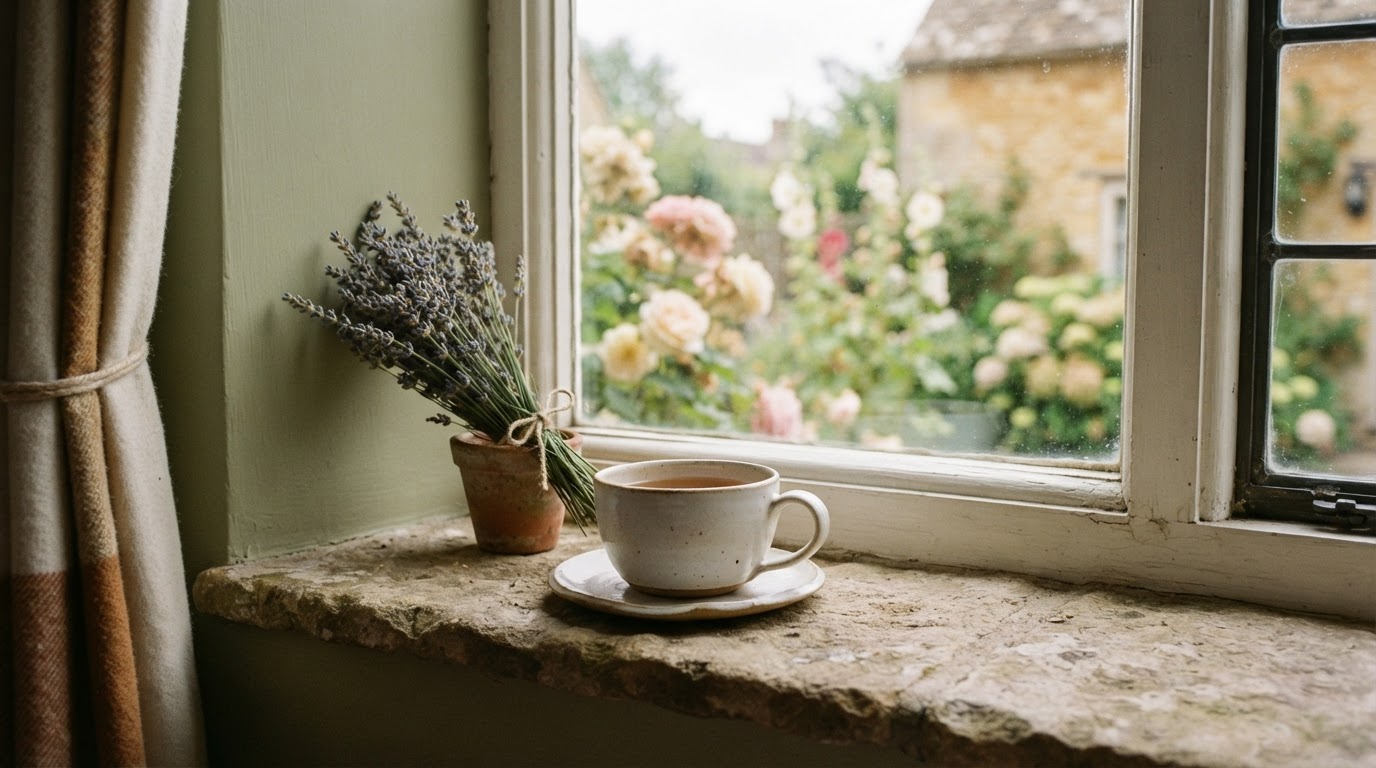
Try this three-minute grounding practice when you want a quiet moment between tasks. You’ll notice what supports you, choose a visualisation or a sound, and come back to the room before taking one small next step.
What grounding means here
In my Almighty Anxiety spiritual development course, grounding begins with a simple image: your feet are supported and roots travel down into the earth. You can try that image indoors, on a lunch break or just before you start another task. You can also do the whole practice through your senses. The point is to give your attention somewhere specific to land.
Before you begin
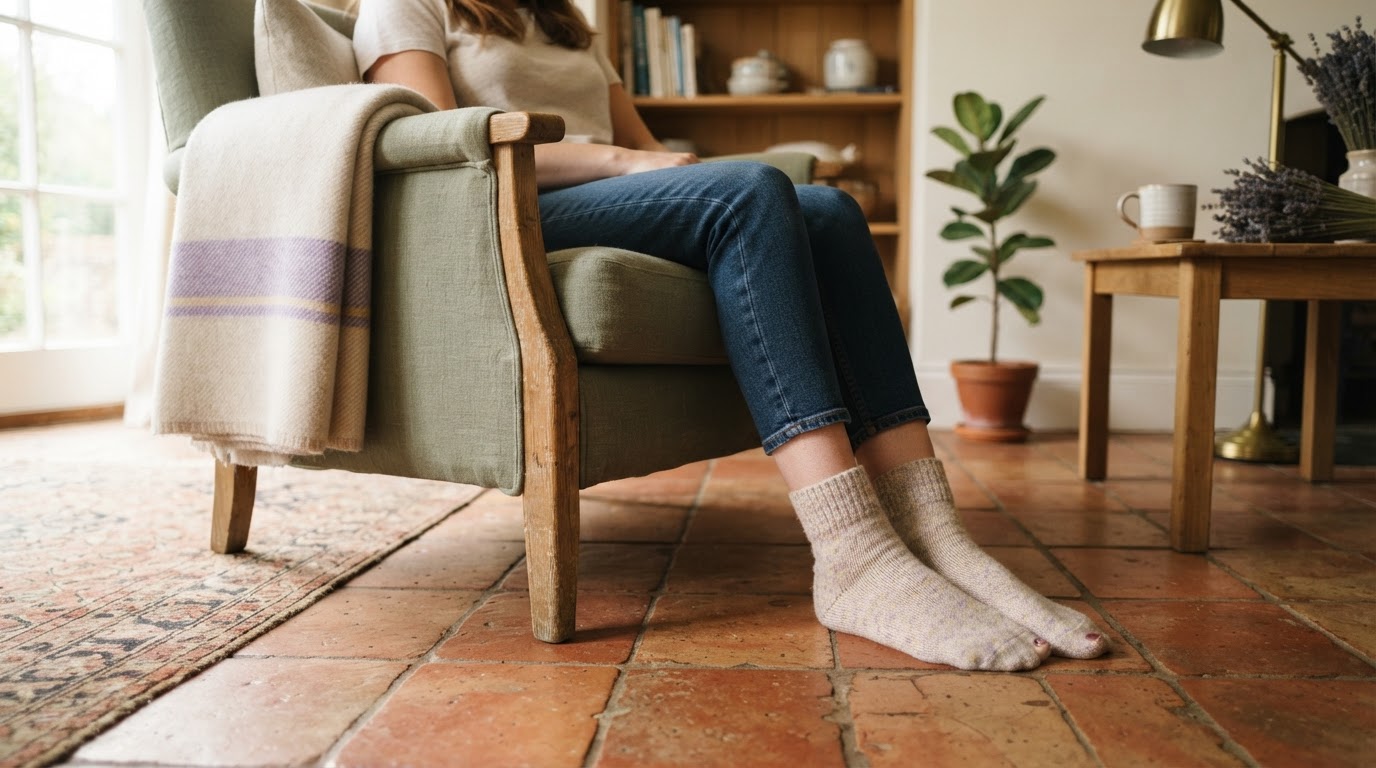
Find a seat where your feet can rest comfortably. If they don’t reach the floor, use a footrest or notice the surface supporting you. Keep your eyes open if that feels more comfortable. You can use a clock, but the timings are there to give the practice a shape. A few moments on each step is enough to get started.
Minute one · Notice what supports you
Let your hands rest where they naturally fall. Notice one place where your body meets a surface. You might feel the sole of a shoe, the edge of a cushion or the back of the chair. Spend a little time on the details. Is the surface firm or soft? Can you notice where the pressure changes? Let your breathing keep its usual rhythm. If you find yourself planning the next ten minutes, come back to a single point of contact.
Minute two · Picture roots or follow a sound
If you enjoy visualisation, imagine the roots of a tree extending down from the places that feel supported. Let them grow at their own pace. You might picture dark soil or damp earth after a rain shower. A vague impression is enough. If pictures don’t come easily or you prefer to keep it practical, pick one sound and listen to it for a few moments. A fridge humming, footsteps in the hall or traffic beyond the window will do.
Minute three · Come back to the room
Look for one ordinary detail around you that you hadn’t noticed a moment ago. It could be light on the table, a thread in your sleeve or the way a cup casts a shadow. Now decide what you want to do next. Choose an action small enough to start straight away, such as filling a glass of water, putting your keys by the door or opening the document you need. That small transition gives the exercise a natural finish.
Make it fit an ordinary day
Try the seated version before your first email, a standing version while the kettle boils, or a shorter version before you step through the door after work. In a busy place, you might simply notice your shoes against the ground and find one fixed point to look at. If you use a wheelchair or another mobility aid, you could notice the contact of your hand with an armrest, the texture of your clothing or a sound nearby. Choose a cue that is already part of your day so you have a chance of remembering it.
If you find it difficult to sit still
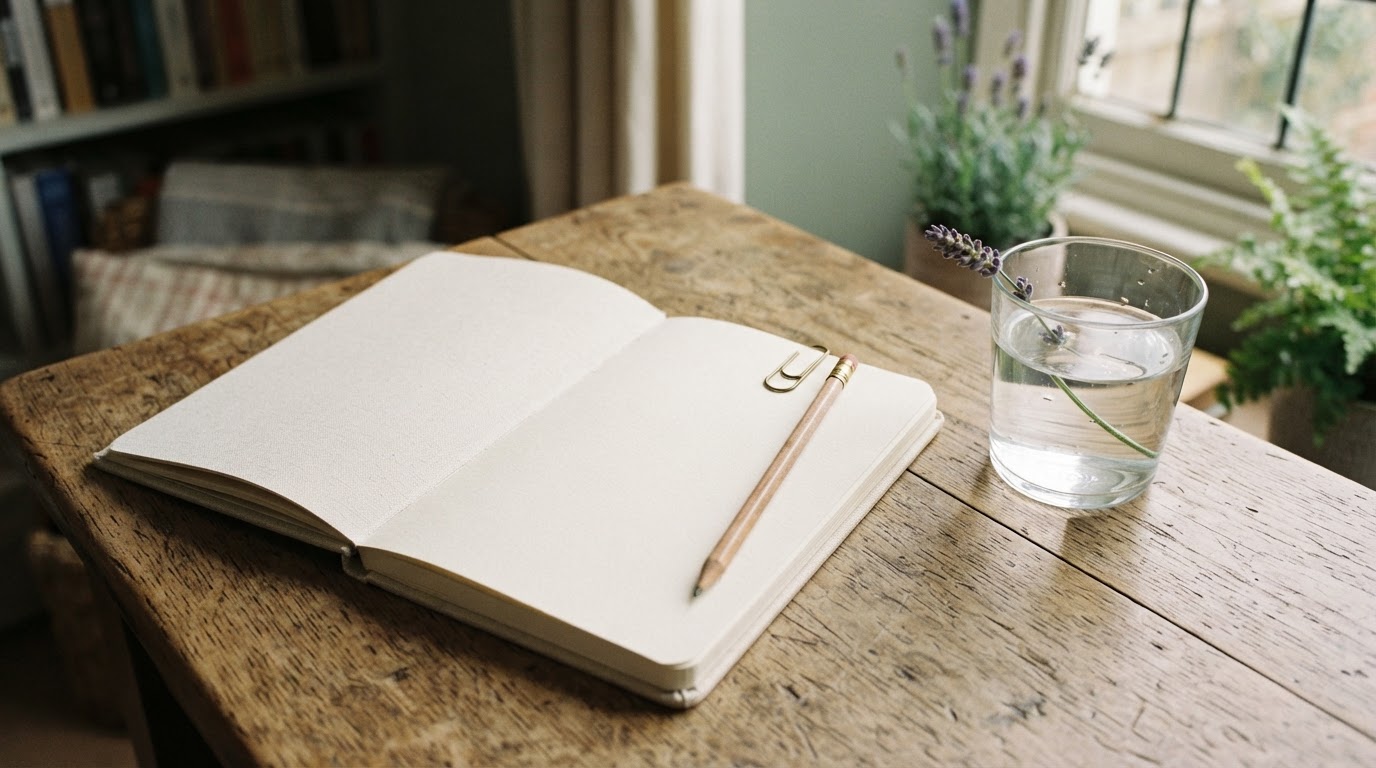
Try the practice while doing one slow, familiar action. Turning a mug in your hands gives you a shape and texture to focus on. Folding a towel gives you a movement you can follow from beginning to end. If you lose your place, pick up the next fold or notice where your hand is now. There is no need to restart the exercise. You can finish as soon as you are ready to move on.
A question to take into your day
Ask yourself, “What did I notice when I gave it a little more attention?” You can answer with a few words. “The soles of my feet felt warm.” “The room was quieter than I thought.” If the roots image felt natural, keep it. If the image was distracting, use the sensory version next time. The practice can take a different form depending on where you are and what feels comfortable.
Further reading
For a sensory grounding exercise, see the Royal Berkshire NHS grounding guide. The roots visualisation comes from Almighty Anxiety and is offered here as a spiritual reflection practice.
Want a mini WhatsApp reading with me?
If there’s a question you’d like to explore, message me directly. I’ll share the details for a mini reading with me personally.
Leave a Reply