
Explore the clairs as spiritual language, journal your impressions and check your hunches against what you can observe.
Learn to distinguish a signal from a story
Someone mentions a new project and you notice yourself hesitate. That pause is a signal you can describe. ‘This project will be a mistake’ is a story about what the signal means. You might be reacting to a rushed conversation, remembering an earlier project or simply missing information about the deadline. Start by naming the detail you actually noticed. Then give yourself room to consider several possibilities. The clairs vocabulary can be meaningful in spiritual practice, and the distinction between what you noticed and how you interpret it is useful whichever vocabulary you use.
Work through one intuitive decision
Name the decision precisely
Self-trust starts with paying attention to what you’ve noticed in your own experience. Translate a broad question such as ‘Should I change direction?’ into ‘Should I try teaching a one-hour workshop next month?’ A smaller decision lets you state what you sense and gives you something you can test.
Give your judgement a reality check
Kahneman and Klein point to two features that can support skilful intuition: a reasonably predictable environment and opportunities to learn its patterns. Ask what comparable situations you’ve actually been in. If you’re new to the situation, talk to someone familiar with it and ask what they’d check first.
Choose a reversible next step
If you’re drawn to the workshop, you could outline it and ask three likely attendees what they’d want to learn. Write down what response would encourage you and what might change your mind. Self-trust includes knowing how you’ll respond to new information. Review your decision after you’ve heard back.
Work through a decision with two plausible options
You might feel drawn to an invitation while also worrying about how much time it will take. Write the strongest argument for saying yes and the best reason to wait. Ask the organiser for dates, expected preparation and what help is available. An intuition can guide the questions you ask while practical details tell you what you can commit to.
Set a date to revisit your choice
At the end of a short trial, compare the outcome with what you thought would happen. Did you enjoy the work? Were the hours workable? Was there something about the people or setting you hadn’t expected? Note one thing you’d use as a cue next time and one assumption you’d check sooner. This helps you build self-trust through evidence from your own experience.
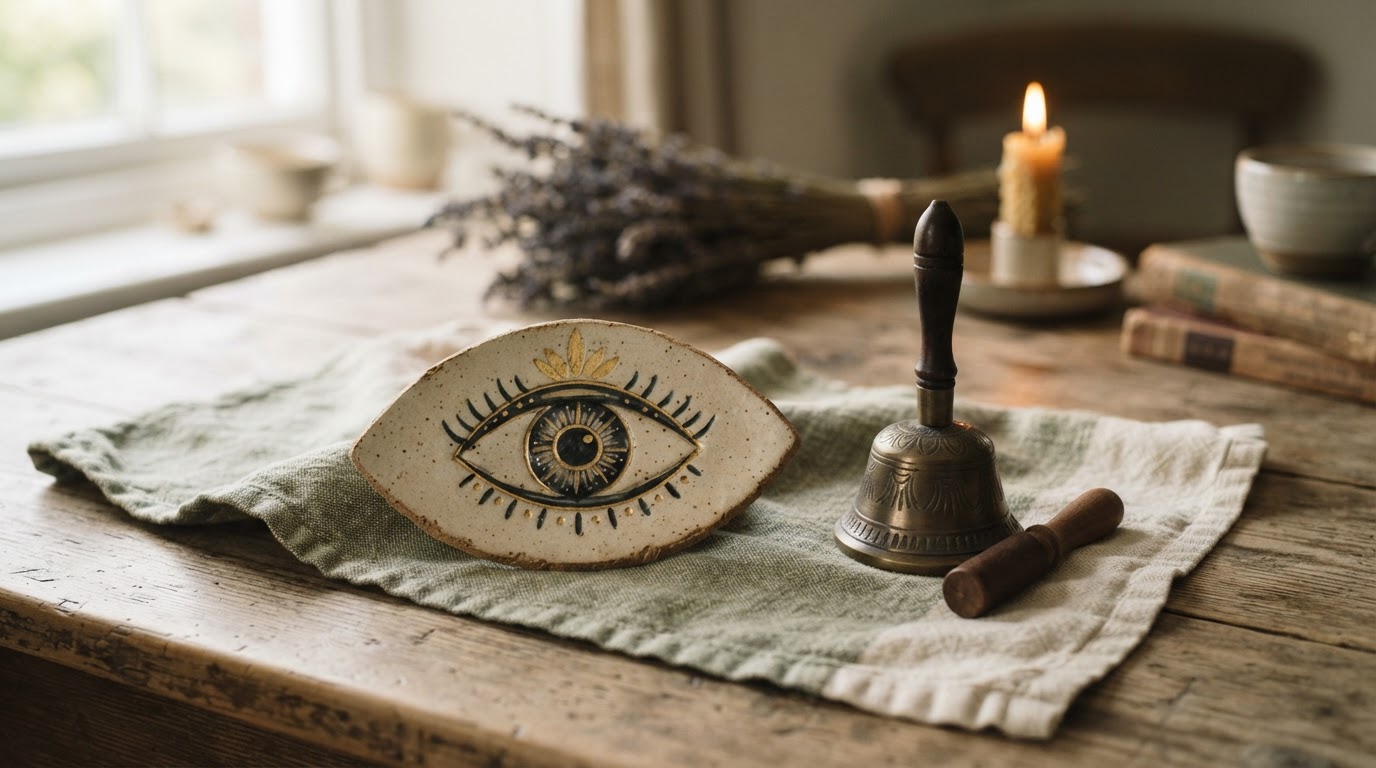
Understand the language of the clairs
Why practitioners use these terms
Some spiritual readers use the term ‘clairs’ to describe different kinds of impressions. The terms give a reader language for a picture, a word or a sensation that comes to mind in a session. The vocabulary represents spiritual interpretations, and people in different traditions may use it differently.
Three terms you’ll hear
Clairvoyance is usually used for visual impressions, such as an image of a doorway. Clairaudience refers to a sound or phrase described as an inner impression in this context. Clairsentience refers to felt impressions, such as a sense of heaviness associated with an image. A reader might also use ‘intuition’ as a broader term for an impression they cannot immediately explain.
Notice the difference between impression and interpretation
Imagine a picture of a blue coat coming to mind. ‘Blue coat’ describes the impression. ‘This means you should return to a place you once lived’ is an interpretation. If you share an impression with someone, give them room to say it has no meaning for them. The same image can carry very different associations.
Use a simple reflection exercise
Write down one image or phrase you remember from a quiet moment. List two ordinary associations and one question about it. Give yourself time before drawing a conclusion. Kahneman and Klein’s paper on intuition provides a separate perspective on when experience can support judgement.
How a reader can phrase an impression
Imagine the reader thinks of a bell. They could say, ‘An image of a bell came to mind. Does that bring anything up for you?’ The sitter may mention a school bell, think of a pet or say it means nothing to them. Give each answer equal room. Supplying a string of guesses can turn a conversation into a search for agreement.
Try a three-column exercise
Use columns for the impression, your first association and another possibility. For a phrase such as ‘wait here’, the first association could be patience, and another could be an instruction you heard earlier that day. Leave the entry there and revisit it tomorrow. Notice which parts you recorded at the time and which you added on reflection. This vocabulary is optional. You can describe the same experience in ordinary language.

Keep a journal of impressions
Give the impression its own line
Divide a page into three areas: what came to mind, what you thought it meant, and what you later observed. For example, ‘A vivid image of a green door’ belongs in the first area. ‘It reminds me of my childhood home’ goes in the second. Keeping them separate lets you return to the entry without mistaking your first association for what you originally noticed.
Write down at least two readings
Start by noticing when and how an impression arises. Give an impression more than one plausible reading. A sense of hesitation could reflect a detail you missed, a difficult memory, or simple tiredness. If you’re making a decision, identify one fact you could check before acting on the feeling.
Review examples that didn’t fit
At the end of the week, choose one entry that felt accurate and one that didn’t. Was the outcome clear beforehand? Did you remember the detail exactly or change it later? Kahneman and Klein argue that confidence is a poor gauge of accuracy. Reviewing the entries together gives you a fuller picture of what your impressions can tell you.
A sample entry
Suppose you sense reluctance before agreeing to a project. Write ‘I hesitated when the deadline came up’, then ‘I may be concerned about the amount of work’. Add what you can observe, such as how many hours similar projects took, and what you still need to ask. Later note whether the conversation or evidence changed your interpretation.
What to look for after a week
Circle examples where you recognised familiar details and put a question mark beside those from unfamiliar situations. Compare how often you had a clear outcome you could evaluate. Leave unclear examples marked as unclear. If a pattern seems to keep returning, ask what extra information would clarify it. A journal is a place to examine how you interpret experiences over time.
A decision you can work through on paper
Picture a friend inviting you to help lead a group. You like the idea but feel uncertain. Write down what you know: the estimated hours, what the organiser expects and what you have previously enjoyed or disliked in similar roles. Next, write what you sense. Perhaps you want to help but worry you will be the only person available each week. Ask one question that could clarify the uncertainty. ‘How many people will rotate through this role?’ is more useful than asking for general reassurance. Once you have an answer, consider a small trial or a shorter commitment. Record the outcome after the first session so you have something to learn from.
A seven-day journal experiment
Record at most one impression a day. Keep the date, situation, first impression, another plausible explanation and any fact you could check. At the end of the week, find one entry that changed after you heard more. Find another you could not assess and leave it marked as uncertain. This gives you a more balanced record than collecting only striking examples. If your notes keep returning to a familiar environment, such as work you have done for years, ask which concrete details you are recognising. With an unfamiliar situation, look for ways to gather information or seek a perspective you trust.
When to give yourself more time
Some decisions deserve a conversation and a proper review of the options. If the decision involves another person, ask them what they meant rather than relying on your impression of their intentions. For something expensive or difficult to change, think through what would make you reconsider before agreeing. Where an issue calls for qualified advice, bring the facts and questions to someone who can help you assess it. Self-trust can mean taking your impressions seriously enough to examine them and giving yourself permission to change your mind.
Compare a familiar and unfamiliar hunch
Imagine a gardener who notices leaves curling on a plant they have worked with for years. They may recognise a pattern from previous seasons and can check the soil or look for a familiar pest. If they have never grown the plant, the same confident feeling has less behind it. They can ask someone with experience, read reliable guidance and see what happens next. You can use this same comparison for an intuitive decision: what experience might be informing the impression, and which detail could you check?
Notice what you choose to record
It is easy to remember the striking matches and forget the occasions when an impression led nowhere. Give ordinary impressions a place in your notes, including those that turned out differently from what you expected. A reliable review uses the whole record you have, while acknowledging that a short journal leaves many things unresolved.
Further reading
Kahneman and Klein, Conditions for Intuitive Expertise
Want a mini WhatsApp reading with me?
If there’s a question you’d like to explore, message me directly. I’ll share the details for a personal mini reading with me.
Leave a Reply