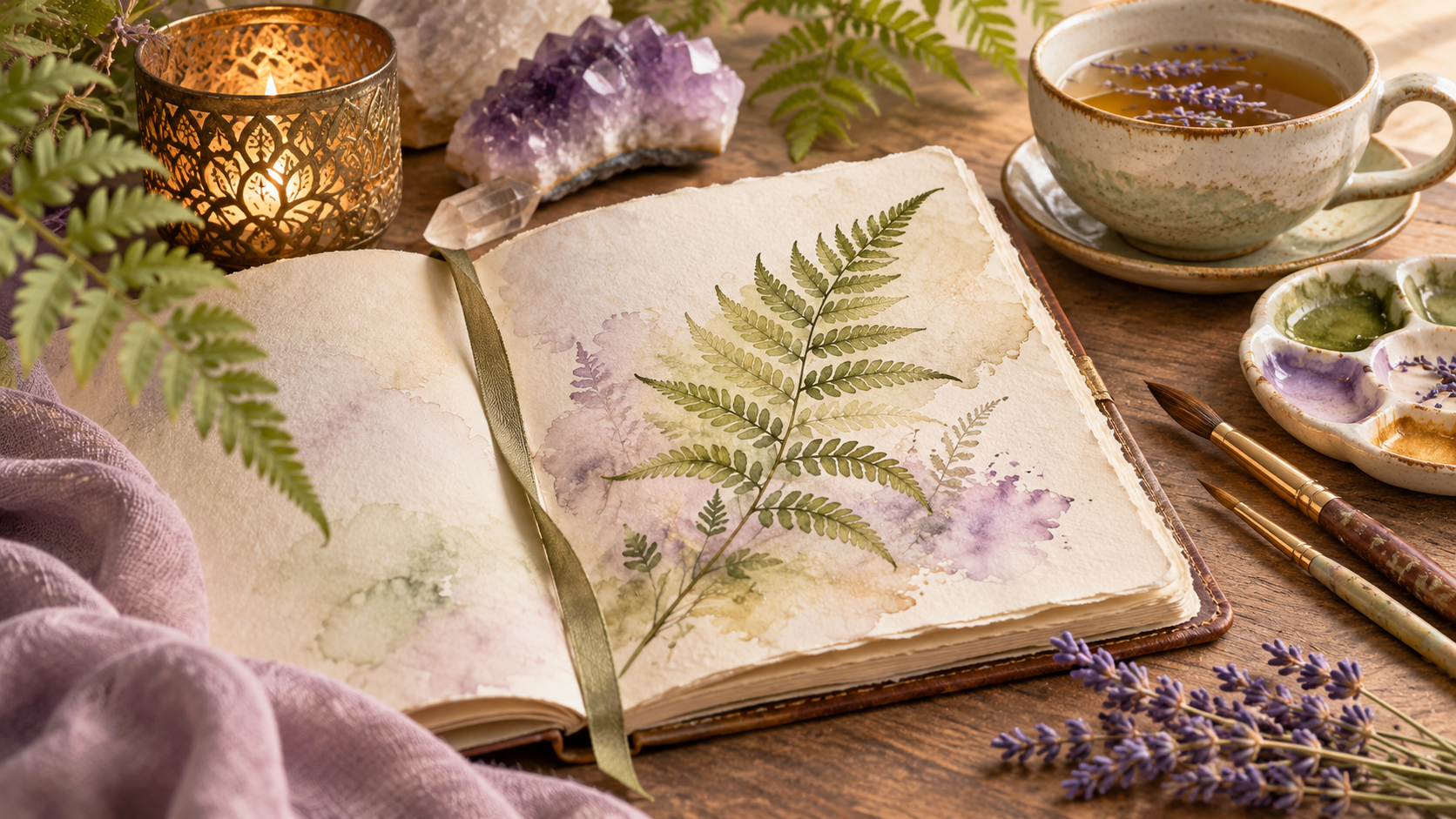
Learn a simple visualisation practice, rehearse a real-world next step and choose an everyday object to remind you of your intention.
Three different jobs for a visualisation
Creative visualisation can help you describe an imagined place, rehearse an action or remember an intention. Those jobs call for different details. When imagining a garden, the texture of a bench might matter. When rehearsing a conversation, the exact first sentence may help more than the background. When using an object as a reminder, the main question is where you will see it. Pick one job for the exercise you’re about to do. This avoids spending time making the scene more elaborate when you really need a specific action you can remember.
Build a scene from familiar details
Choose a place with a few familiar details
Begin with a familiar scene and give yourself room to experiment. Choose an ordinary scene you can stay with for a few minutes. Imagine standing in a garden or walking along a familiar street. A clear image is optional. You might begin with the sound of rain hitting a window or the feel of a warm jumper.
Build the scene in three small additions
First choose where you are standing or sitting. Next bring in one detail such as the colour of a bench or the warmth of a mug. Finally, imagine one small action, perhaps opening a gate or turning a page. The guided imagery overview linked below offers another example of how setting and sensory detail can shape an exercise.
Use words or marks if pictures don’t come
Write three words that belong to your scene. For example, ‘stone, rain, quiet’. Read them back slowly and see what associations come up. You could also sketch simple marks or put three objects on a table. All three approaches give your attention somewhere to go.
Try again with a different scene
Afterwards, write one thing that made the scene easier to stay with. If the first scene felt too elaborate, next time begin with an object and a single detail. This is a practice in imaginative attention, so the scene can change as often as you like.
Try a 60-second scene
Choose a kitchen table, a garden bench or somewhere you know well. Spend a few moments imagining a single detail, such as a chipped edge on a mug. Then add a sound, a movement or one word that belongs in the scene. Try allowing the detail to change without needing to hold the full picture in your head.
Compare two ways of imagining
Next time, describe the same scene out loud or write three lines about it. Afterwards ask which version you could return to most easily. Some people find movement, texture or language more accessible than a mental picture. You can also sketch a simple shape and use that as the focus of the exercise. Choose whichever method lets you begin without struggling.
Rehearse the action
Imagine the process at ordinary scale
Use your imagination to rehearse the first few minutes of something you want to begin. Pick something you want to start and imagine the first five minutes. Where are you? What is on the table? Which tool do you reach for? Picture the work in an ordinary room on an ordinary day.
Include a likely obstacle
If you want to draw but share a busy space, imagine someone needing the table. Think of one alternative you could try, such as using a clipboard on your lap or taking your sketchbook outside when the weather allows. A second version makes the plan less dependent on ideal conditions.
Take one step while it is fresh
Turn one detail into a real action. Put out the clipboard, send a short message or write down the opening question. Then set a cue for when you’ll begin. After trying it, ask which imagined detail helped you and which was worth changing.
An example with a creative project
Suppose you want to begin a collage. Imagine putting three scraps on the table and moving them until one arrangement catches your eye. Then picture the likeliest interruption, perhaps needing to clear the table for dinner. Decide how to keep the pieces together, such as placing them in an envelope before you move them.
Make a plan you can test
Write one line that begins ‘When I have ten minutes after dinner…’ and finish it with the first physical action. Try it once. Afterwards, note what took more time than expected and whether the opening action was easy to remember. If a particular detail helped, keep it for the next attempt. Leave the rest open so actual experience can shape the plan.

Pair a reminder with an intention
Pick something you already notice
An everyday object can serve as a reminder of an intention as part of a personal ritual. Choose one that already sits in your path, such as a pebble on the windowsill or a keyring by the door. Give it a meaning that fits this week rather than asking it to represent everything you want to change.
Connect the object to an action
Write out the response you want to practise. ‘When I put my keys down, I’ll write one line about what I want to leave behind from the workday’ gives the object a practical job. Gollwitzer describes how if–then plans connect a cue to a response. Keep the action small enough for a busy day.
Check what happens after a few days
Did you see the object at the right time? Did the sentence still fit? Move it if you kept missing it, or choose an action that is easier to start. If the object has personal spiritual meaning, that can sit alongside the everyday purpose you’ve given it.
Turn the cue into something specific
A pebble by the front door could remind you to ask, ‘What can wait until tomorrow?’ A bookmark could cue you to read one more page before opening your phone. Choose a link between the object, the place and the action. If you’re tempted to give the same object several jobs, pick the one you’ll see most often.
What to do when it becomes background
Move the object to the moment you want the cue to happen. A note for the end of work might belong beside the computer rather than by the front door. If you still miss it, use an existing action as the prompt, such as closing your laptop. After a week, decide whether the cue is still worth keeping and give yourself permission to retire it.
A worked example from idea to action
Suppose you want to start sharing your drawings. Picture where you would sit to choose one picture. Imagine opening the folder where you keep your work. Then add an ordinary obstacle: perhaps you can’t decide which drawing is best. Choose a rule that would let you continue, such as picking the first finished drawing you wouldn’t mind showing a friend. Next, put a pencil beside the folder and give it a job. When you sit down tomorrow, seeing it can remind you to send that one drawing to one person. You can review how the action went and decide whether to share anything more. The exercise has done its job once you have something concrete to try.
How to adapt when pictures are faint or absent
Use three sentences instead. ‘I am at the kitchen table. I have five minutes and my notebook. I will write the opening line before I look at my phone.’ You could also put the relevant objects on a table and move them through the order in which you will use them. A person who thinks through movement might rehearse opening a notebook and positioning a chair. If you use a drawing, simple lines and arrows are enough. Notice which form gives you a clearer sense of what to do when you start.
Keep a short record of the test
Write down the action you rehearsed, when you actually tried it and what surprised you. If the first step took longer than you expected, shorten it next time. If your chosen object was already too familiar to catch your eye, move it to a place where you are looking at the right moment. If the imagined action didn’t suit real circumstances, change the plan using what you learned. Review within a few days so the details are still fresh. The most valuable record may be one precise line about what you will do differently tomorrow.
Try the routine with a second kind of decision
For a planned conversation, imagine the first moment you have the other person’s attention. You might be standing beside a desk or speaking on a call. Rehearse a simple opening such as ‘I’d like to talk about how we divide this task.’ Then imagine two responses, one receptive and one rushed. Think of a way to continue in either case, such as suggesting a better time. If you need a reminder, put your notes next to the object you’ll see just before the conversation. Afterwards, notice which parts were easy to put into practice and how the setting actually affected the exchange.
Keep the reminder easy to explain
Say what the object means and when you want it to help. ‘The pencil is here to remind me to put one opening sentence on the page after breakfast’ has a particular place, time and action. Keeping it that specific gives you a better chance of finding out whether the reminder works. If you keep seeing it at a time when you can’t act, move it or use something else. The exercise can help you prepare for a choice. The actual experience will tell you more than the rehearsal could.
Further reading
Guided imagery overview from the US Department of Veterans Affairs
Gollwitzer on implementation intentions
Want a mini WhatsApp reading with me?
If there’s a question you’d like to explore, message me directly. I’ll share the details for a personal mini reading with me.
Leave a Reply