
Create a smoke-free home ritual with a small reset, meaningful colours and a safely chosen light.
Begin with the change you want to mark
A home ritual can help you mark the end of a demanding week, make room for a new routine or give a shared space a fresh purpose. Choose one change you can describe. ‘I want this table to be somewhere I can read for ten minutes’ is more useful than ‘I want the whole house to feel different’. Decide how much time and space you have. You can mark a change with daylight, a colour you like or a few minutes with one familiar object. A small space can be easier to maintain once the ritual is over.
Give a corner a fresh start
Choose one corner
A simple household ritual can mark a fresh start without using smoke or fragrance. Choose a shelf or table you use often. Clear it, wipe it down and return just the things you want to use or see there this week.
Use a detail to mark the change
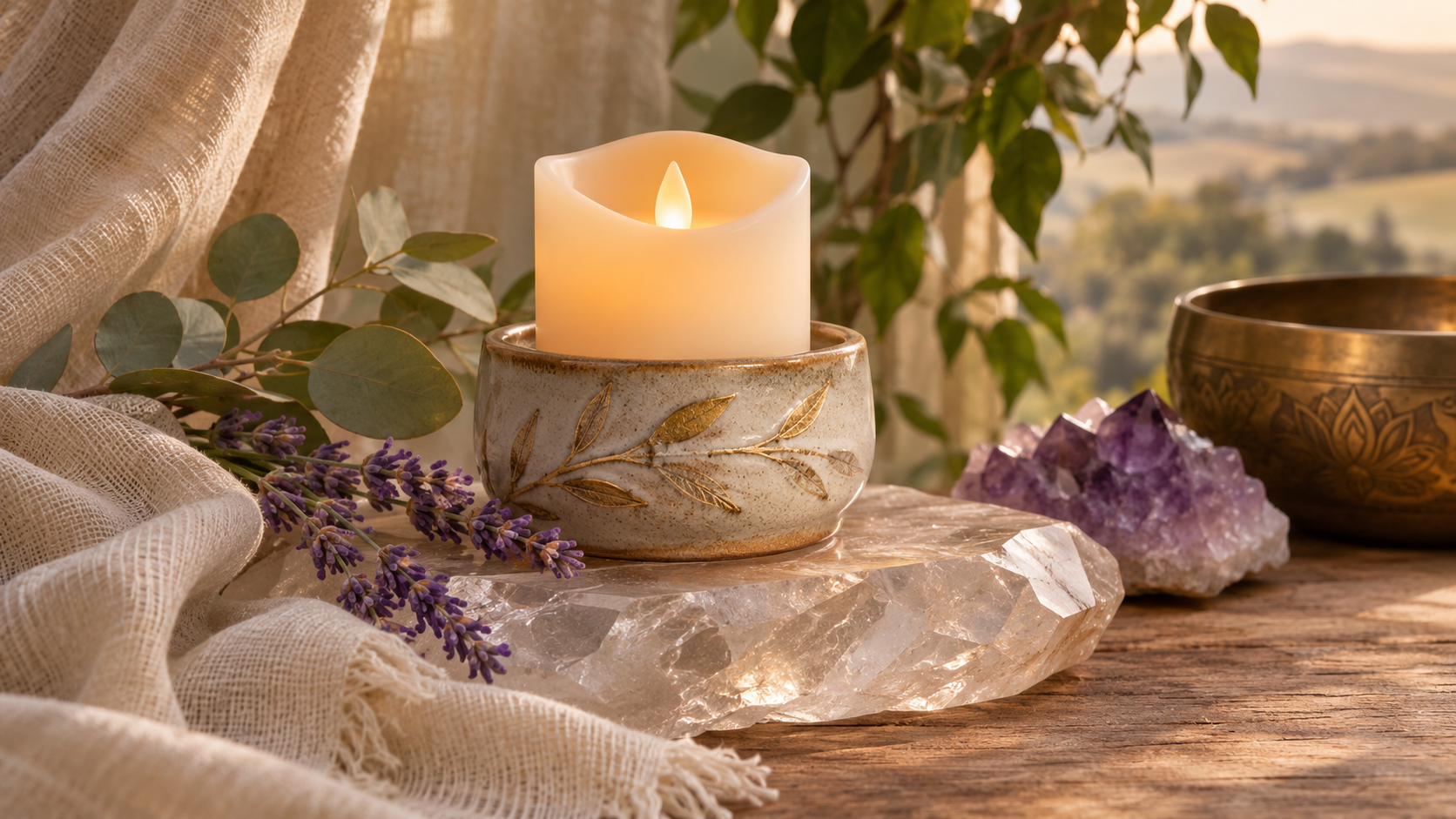
Open a window briefly if safe and appropriate, or use fresh linen and a small branch in a vase. If you enjoy the symbolism of a candle, a flameless light can mark the start and finish of the ritual. You can also put on a piece of music and stop when the track ends.
Choose something to do differently
Write ‘What am I making room for?’ and give a practical answer such as ‘A place to read after dinner’. Put the book you want to read on the newly cleared surface. You might also choose something you are finished with, such as using that spot as a place to drop unopened post.
Choose a small test for your intention
If your intention is to connect with people more regularly, choose one person to message and one realistic time to send it. ‘After lunch on Thursday, I’ll ask Sam whether they’d like a walk next week’ makes the action specific. Their reply is separate from your part. If the cue doesn’t happen, decide in advance where you’ll try again.
Reflect without keeping score
At your review, look at the cue, the action and whether it still serves the intention. A plan might fail because you had no time after lunch. Move the cue to something steadier, such as setting your keys down when you get home. If the goal has changed, write the new reason in plain language and choose a step that fits.
Mark the moment with light
Give the moment one purpose
A candle can act as a visual cue to begin and end a reflection. Choose one question before you begin, such as ‘What would I like to give more attention to this week?’ Place a notebook nearby and use the light to mark a short window for reflection.
Use a light you can supervise
A battery candle gives you the same visual cue without an open flame. If you use a lit candle, London Fire Brigade advises using a stable, heat-resistant holder, keeping it away from anything that can catch fire, and never leaving it unattended. Put it out before leaving the room or when you finish.
Write one line and close the ritual
Spend a minute with your question, then write one line that you can return to. If the answer is ‘more time outdoors’, choose a realistic first step such as looking at your calendar for a short daylight walk. Turn off the light when you’ve finished.
A flameless version for a small space
Use a battery candle or a lamp you can switch off when you finish. Set out a card with a single question, and move papers away from the place you put the light. If you’re using a real flame, keep a clear, stable area around it and extinguish it before you move away.
Four minutes with one question
Read your question slowly, then notice one detail of the light. Give yourself a minute to think and write a sentence about what you noticed. If your question is about the week ahead, finish with something you can realistically do, such as leaving a free evening in your calendar. Turn the light off and decide whether to revisit the note later.
Choose a colour that means something to you
Start with a personal association
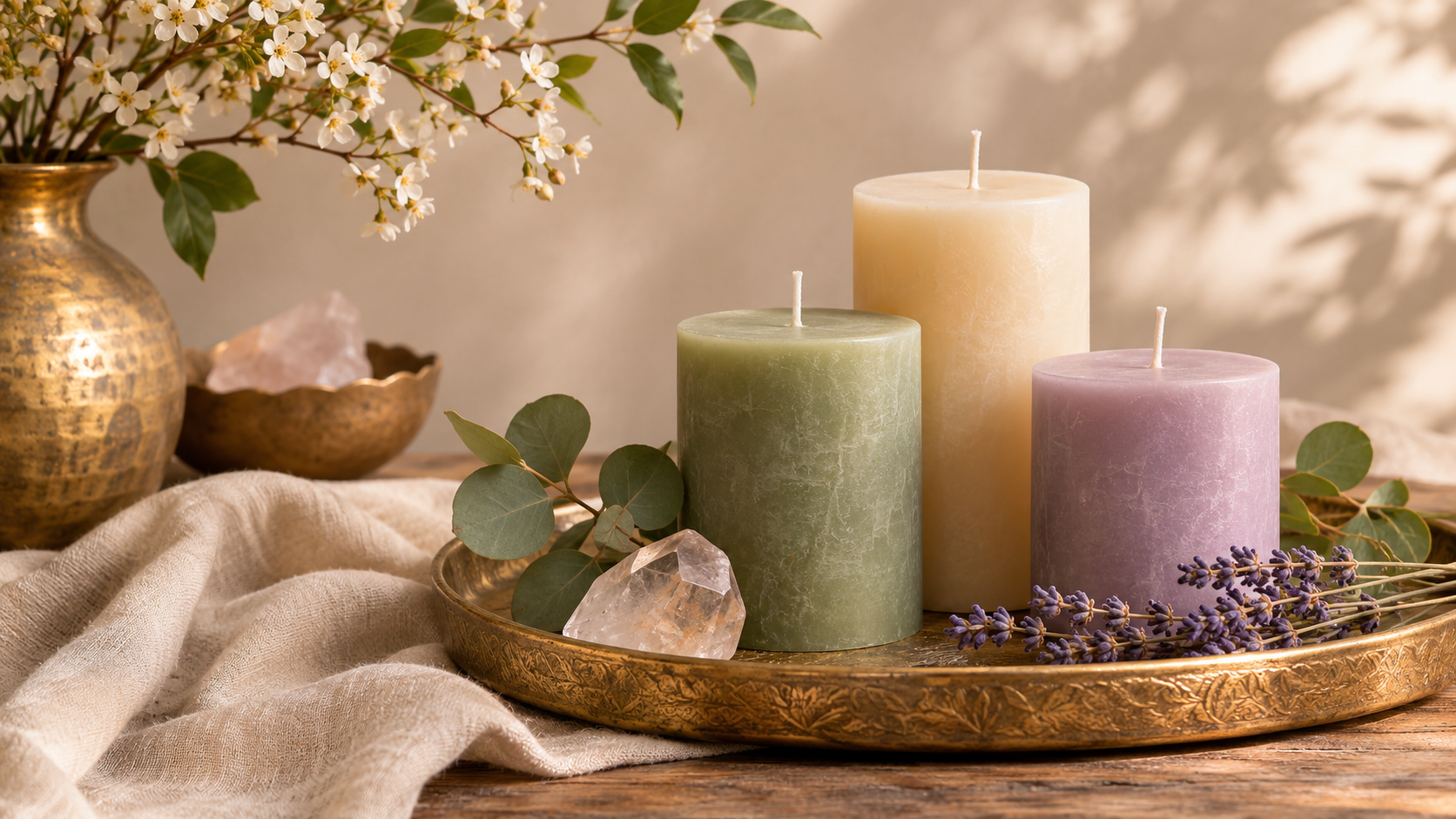
The associations you already have with colour can give a ritual a personal meaning. Pick one question for the ritual and notice which colour you associate with it. Sage may remind you of a walk, gold of a celebration or lavender of a familiar garden. Another person might choose entirely different colours for the same reasons.
Try one object rather than a full collection
Use a scarf, scrap of paper or an unlit candle you already own. Put it nearby while you write your intention. If you want the colour to represent patience, record one occasion when you’d like to pause before responding.
Let the meaning change with context
The same shade may feel welcoming in one place and formal in another. Write down what made you choose it today so you can revisit the association without turning it into a fixed rule. You can keep it for this ritual or choose a different cue next time.
A simple way to test a colour
Choose one word, such as steadiness. Look at a few objects you already own and pick the colour you naturally associate with it. Then try two short reflections, each with a different colour. Afterwards, record which one brought a clearer example to mind, or whether the time and setting mattered more.
Use colour to support a concrete intention
If lavender reminds you to pause, you could put a lavender bookmark in the notebook you use before a busy day. When you see it, decide which conversation deserves a little more time and write down one question you want to ask. As the ritual changes, change the colour or put it away. The meaning belongs to the context you give it.
A fifteen-minute example for a shared home
Start with a surface you have permission to use. Put your own things away, give the area a wipe and place a clean cloth or another visual marker on it. Pick a colour connected with what you want to make room for. If lavender reminds you of a quiet garden, a lavender bookmark might give the space its meaning. Use a lamp or battery candle to mark the change. Sit down and actually use the space for a few minutes. If other people share it, tell them what you’d like to try and ask where it would cause the least inconvenience.
Make a version for days with less time
When you have two minutes, put one thing in its place, turn on a lamp and write one line about what the change means. When you have longer, you might wash a cloth or move a chair to make practical use easier. If you come home late and need to go straight to bed, the two-minute version is enough. You can also use a change of light to mark the end of the ritual. Keep your exit simple so finishing the practice feels as natural as starting it.
Review the space after a week
Notice which objects ended up back on the surface. This can show you what the space is already useful for. If post keeps gathering there, put a tray beside it or choose another spot for reflection. Ask whether the ritual made the activity easier to begin. If it did, retain the smallest detail that helped. If it didn’t, change one practical thing and try that for a few days. The ritual can be repeated at the end of a week or when the room needs to serve a different purpose, with a different object or colour if you like.
A practical example for a rented room
Choose a corner that gets daylight and where you can move your own belongings easily. If you can’t change the furnishings, try a folded cloth and a notebook. Pick a colour that connects with what you want the space to represent, perhaps a soft cream that reminds you of being outdoors on a bright morning. Turn on a small lamp if you want a cue to begin. Use the space for one short activity. When you finish, leave it arranged so you can use it again without setting everything up from scratch.
Agree on the details in a shared household
If your plan affects other people, ask where a small change would fit naturally. Someone may need the table for a regular task or dislike fragrance. A tray you can clear and put away quickly can make a shared solution easier. If you want to use a candle, follow the fire-safety guidance and choose a flameless option around anything that makes a naked flame difficult to supervise. Keeping the ritual simple can make it easier to repeat without disrupting the everyday purpose of the room.
Choose one visible sign it has worked for you
Perhaps you actually sit down to read after dinner, or you find your notebook when you want to use it. Make a note after a few days. If the space continues to fill up with other things, consider what that tells you about the way your home is used. Change the position of one item or try keeping your reflection materials together so that you can use them where it suits you.
Further reading
London Fire Brigade advice on candles and incense
Want a mini WhatsApp reading with me?
If there’s a question you’d like to explore, message me directly. I’ll share the details for a personal mini reading with me.
Leave a Reply